Uganda, 1971. The organism enters the literature.
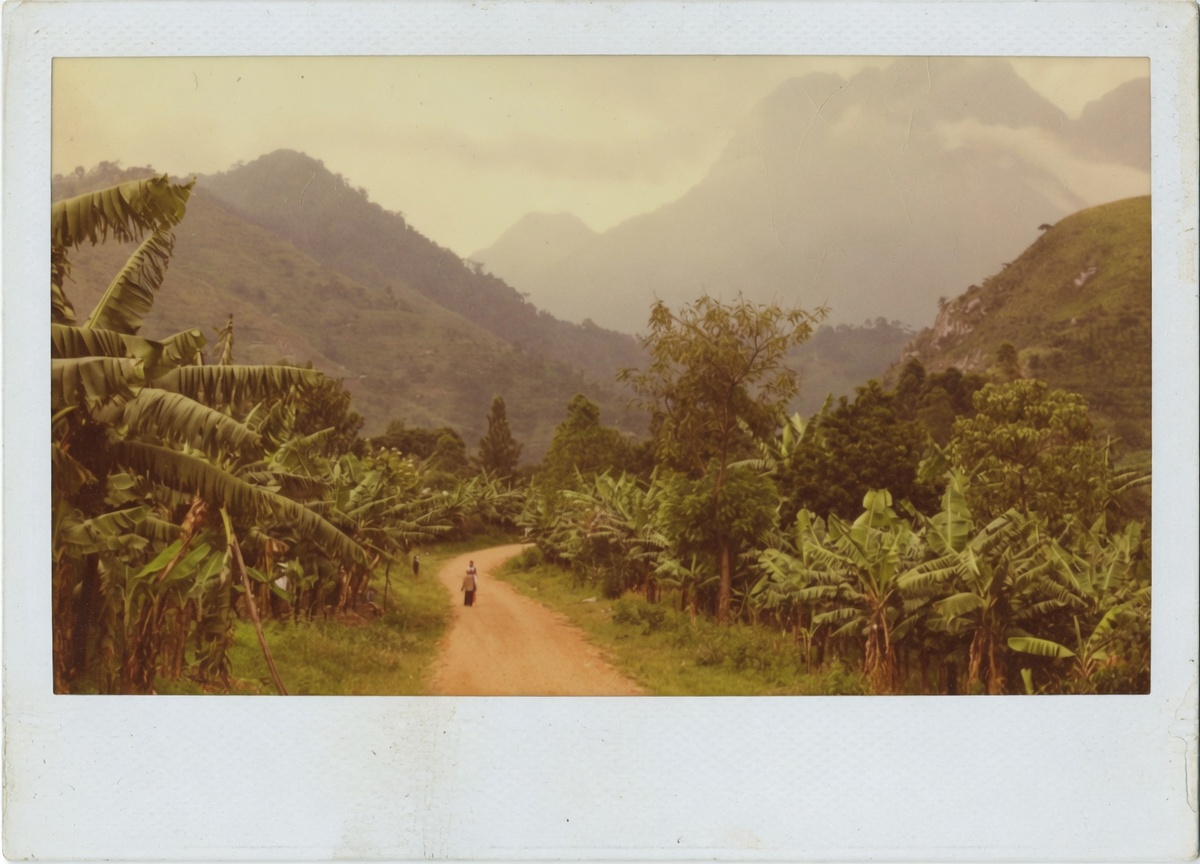
After a successful BCG-leprosy trial in Uganda in 1971, scientists isolate a series of strains of Mycolicibacterium vaccae — a soil-dwelling, free-living mycobacterium — from the local environment. One of those strains, later catalogued as NCTC 11659, becomes the organism the literature returns to for the next fifty years.
In 1973, Professor John Stanford at University College London publishes the first paper recognizing M. vaccae as a potent immunomodulator. By 1980, the first 1 mg human doses are administered to two healthy volunteers in London. By 1985, the first tuberculosis trials are underway. Over the next two decades, Stanford and collaborators run TB and leprosy trials in Argentina, India, Nigeria, Romania, South Africa, Vietnam, the Gambia, Kuwait, Durban, Uganda, and Zambia/Malawi — characterizing the organism's immunological signature.
None of this work was designed as, or describes, a stress trial. It is the immunological foundation on which everything later was built.
The accidental neuroscience.
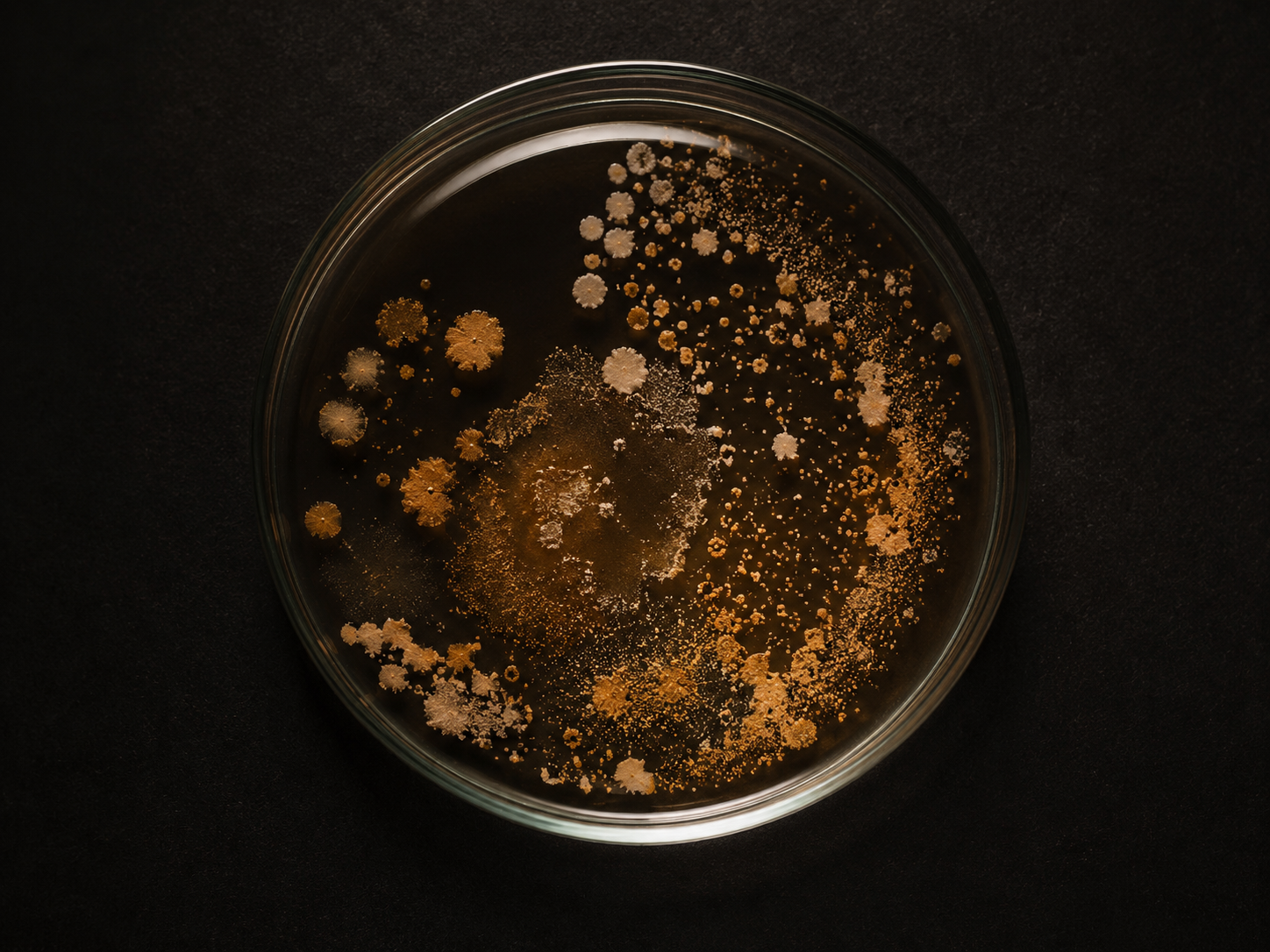
In the late 1990s, M. vaccae enters a different kind of trial. Researchers, encouraged by the immunological work, begin testing a heat-killed preparation as an adjunct therapy in a serious illness. The primary outcomes are mixed. But something unexpected surfaces in the patient-reported data: people receiving M. vaccae report better quality of life and psychological wellbeing, in ways the protocol wasn't designed to measure.
That signal catches the attention of a young neuroscientist, Christopher Lowry, then at the University of Bristol. In 2007, Lowry and collaborators publish a paper in Neuroscience showing that peripheral exposure to heat-killed M. vaccae activates a specific subpopulation of serotonergic neurons in the interfascicular dorsal raphe of mice — neurons that project into the prefrontal cortex — and produces measurable behavioral changes in animal models. The press takes notice. Some peers don't take it seriously.
It takes another nine years. In 2016, working with Stefan Reber's group at Ulm, Lowry publishes the resilience paper in PNAS. Mice pre-treated with M. vaccae before a chronic psychosocial stressor are measurably more resilient than untreated controls. Over the following decade, the immune-to-brain mechanism comes into focus — the pathway detailed on the Science page.
The organism Stanford characterized to teach the immune system, it turned out, was also teaching the brain.
The translation.
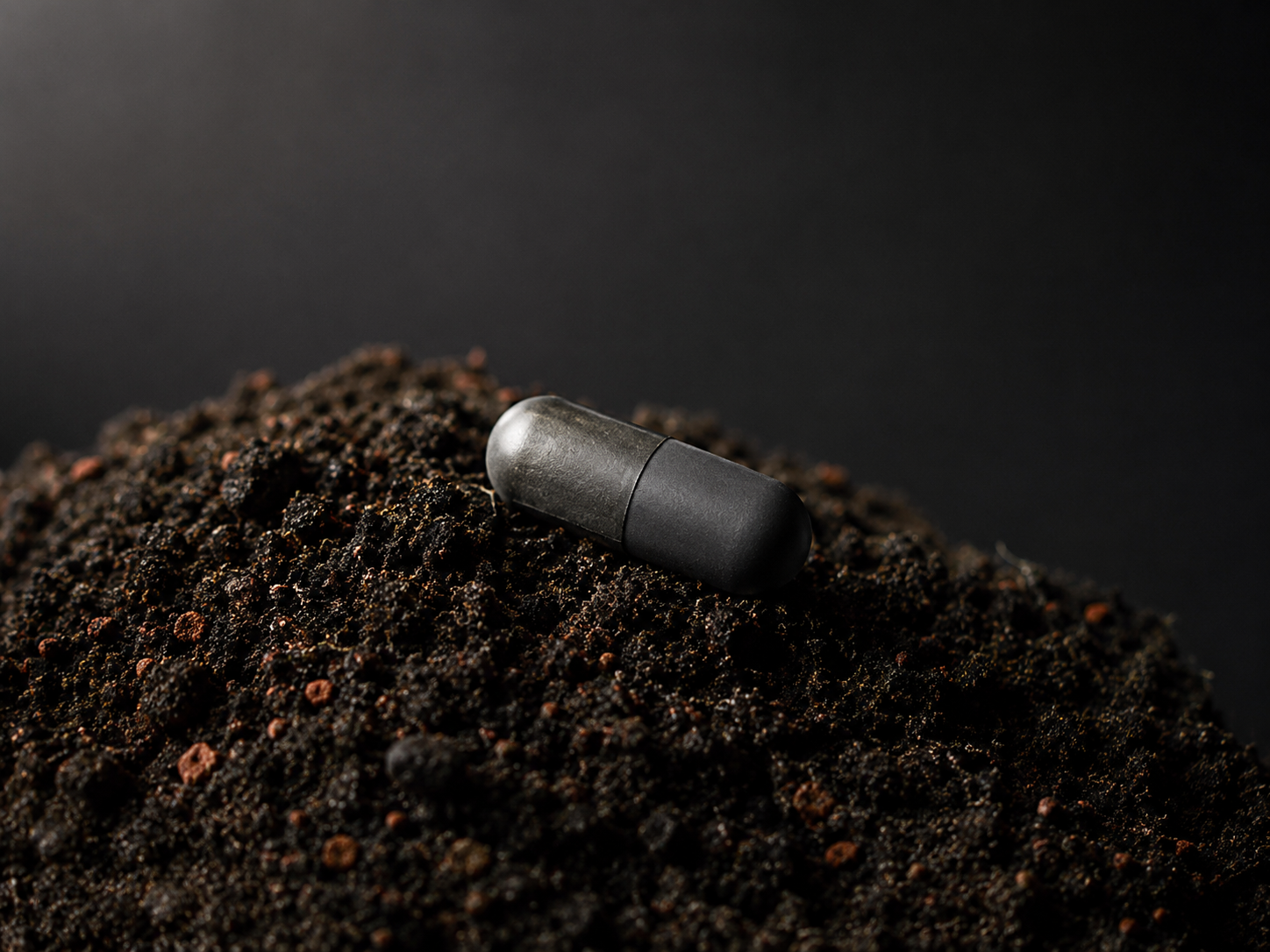
In 2013, Graham Rook, with Lowry and Charles Raison, formalizes the framework that makes sense of all of it. They call it the "Old Friends" hypothesis: humans co-evolved with environmental microbes — saprophytes from soil, water, and untreated foods — that trained immunoregulation across mammalian evolution. The modern indoor, sanitized, antibiotic-rich environment has stripped most of those exposures away. The consequences track with the conditions of modernity: chronic low-grade inflammation and the wear of a system under constant load.
That framing reorients M. vaccae. It isn't a drug. It's a piece of biology people used to have and now don't.
Lowry co-founded Kioga, Inc. in 2018 to translate this research lineage into an oral daily dose for healthy adults. But the original strain — M. vaccae NCTC 11659 — carried an investigational-drug history from those lung-cancer trials, which placed it off-limits for a dietary supplement. So Kioga screened for the highest-performing strain working through the same "Old Friends" mechanism, unencumbered and supplement-grade: KGA-10™, a strain of Mycolicibacterium petrae, branded NeuroAlly™.
In a 60-person randomized, double-blind, placebo-controlled clinical trial, NeuroAlly™ (KGA-10™) reduced hs-CRP by 25% versus placebo over eight weeks and reached significance on perceived stress by week two — in healthy adults, at a 1 mg dose, with no observed safety signal.
Kioga developed NeuroAlly™ and sponsored the 2026 clinical trial that established its effects. īther is the consumer brand built around the ingredient — taking a research-grade postbiotic into daily practice.
A mechanism traced to a 1971 Uganda soil microbe now lives in īther — carried by KGA-10™, the strain selected to bring it into a daily capsule for the modern indoor human.
One organism. Fifty years of literature.
One human trial. One capsule.
M. vaccae NCTC 11659 has been studied across five decades by Stanford, Rook, Lowry, and many others. That body of work is the scientific context that made NeuroAlly™ a candidate worth taking into a human trial. The trial — and only the trial — is the basis of what we say about īther.
We named the brand īther — an old word for fertile earth — because that is where the organism's story began. One capsule a day. A formulation built on fifty years of literature and validated in a 2026 randomized clinical trial.
Research-lineage disclosures.
The Stanford, Rook, and Lowry research described above is independent academic work that long pre-dates īther. It is presented here as the scientific lineage of M. vaccae NCTC 11659. It is not evidence for any īther product claim — those claims rest on the 2026 randomized, placebo-controlled clinical trial of NeuroAlly™.
Per published disclosures: Professor Christopher Lowry has previously served on the Scientific Advisory Board of Immodulon Therapeutics Ltd. and is a cofounder of Kioga, Inc. Professor Graham Rook has historically held advisory roles with SR Pharma plc, which previously held M. vaccae intellectual property. These disclosures relate to the academic researchers' broader work and are surfaced here for full transparency.