Three interlocking mechanisms. One defined molecule. Fifty years of academic literature. And a 60-person randomized clinical trial of NeuroAlly™ (KGA-10™) in healthy adults.
In plain terms: fifty years of immunology, three independent mechanisms, one defined molecule, and one human trial.
For decades, stress research focused on one system: the hormonal axis. Cortisol. Adrenal output. Fight or flight. Every supplement on the market targets this pathway.
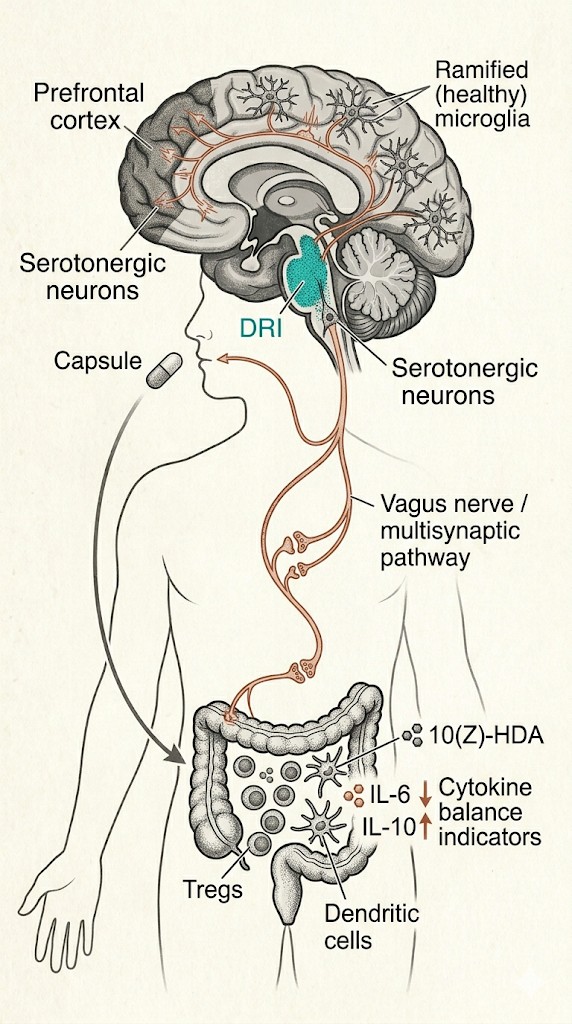
But the immune system regulates stress too. Regulatory immune cells influence neural signaling. Inflammatory tone shapes how stress feels. Your body's response to pressure isn't purely hormonal — it's immunological.
NeuroAlly™ engages this immune pathway — the one first characterized in M. vaccae, a soil organism studied by Stanford, Rook, and Lowry across five decades of academic immunology.
Crucially, NeuroAlly™ is not that research strain. It is KGA-10™ — M. petrae — a separate, supplement-grade strain selected as the highest performer through the same mechanism. The mechanism is characterized in preclinical research; our product claims rest on a 60-person randomized, double-blind, placebo-controlled clinical trial of KGA-10™, completed in 2026.
A note on the evidence that follows: the three mechanisms described in the next section are from the M. vaccae academic literature — animal models and in-vitro work. They are the scientific context for the pathway, not direct evidence for any īther product claim. Those claims rest on the 2026 KGA-10™ trial.
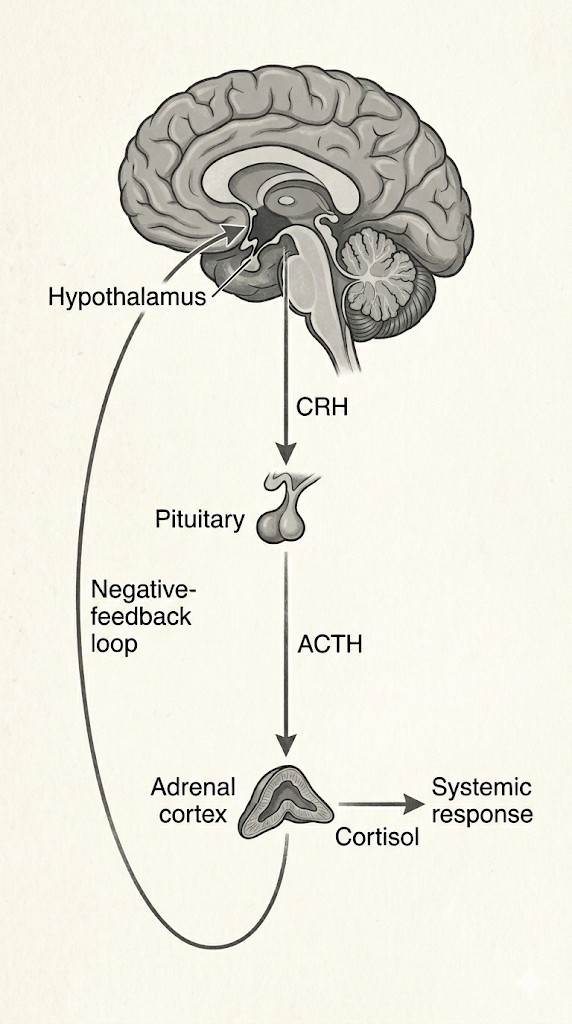
Two pathways. One has a clinically studied postbiotic input.
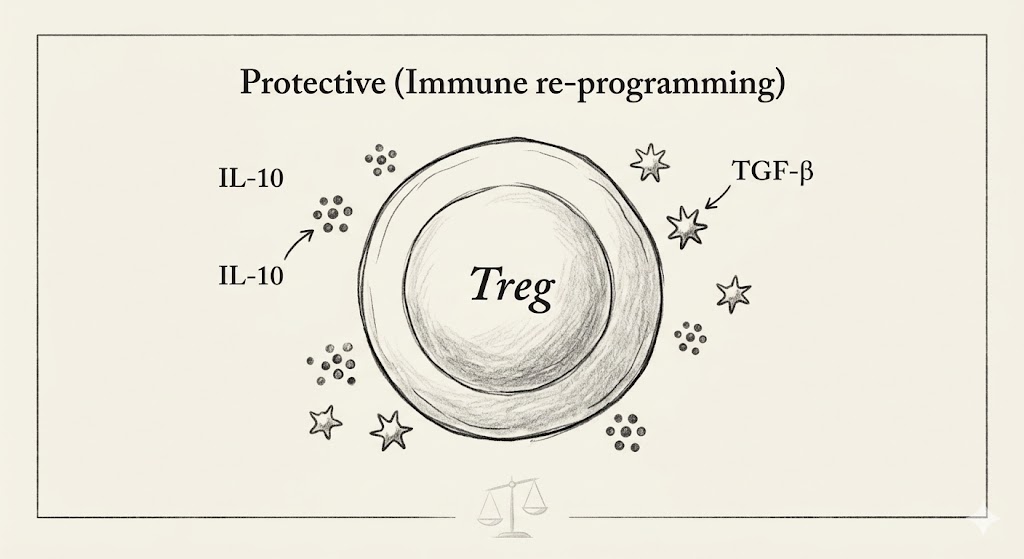
Three interlocking mechanisms proposed across fifty years of independent research. Preclinical context, not product claims.
Engages TLR2 signaling and shifts the immune balance from pro-inflammatory (IL-6) toward regulatory (IL-10, TGF-β) signaling. Induces regulatory T cells (Tregs) that enforce long-term immune tolerance. Resets baseline immune tone.
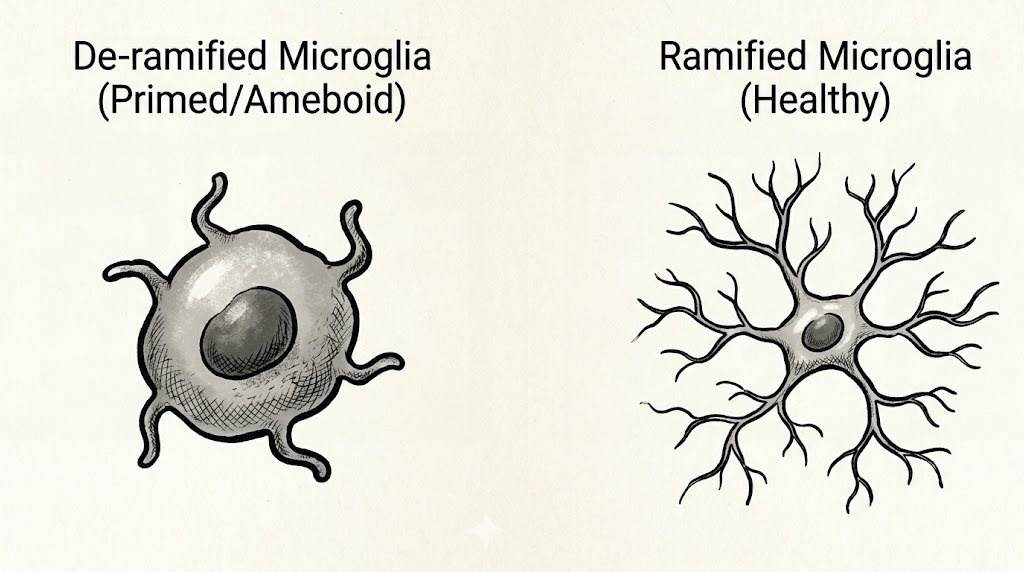
Animal models describe M. vaccae as preventing stress-induced microglial priming through increased regulatory signaling (CD200R1) and reduced inflammatory cytokines (IL-1β). Aged-rat studies describe preservation of ramified microglial morphology.
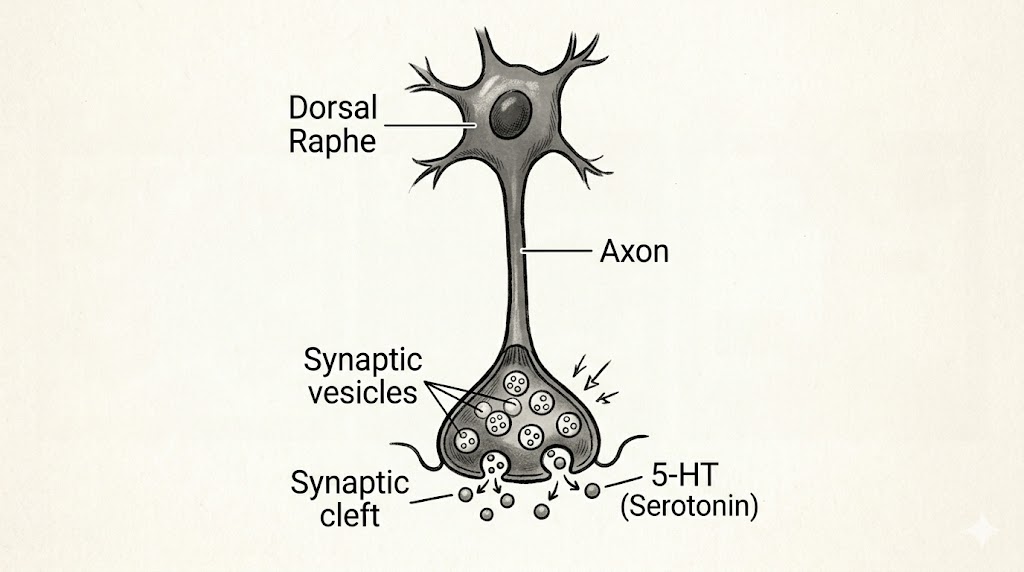
Peripheral M. vaccae rapidly engages a specific subset of serotonergic neurons in the dorsal raphe nucleus, with downstream effects on the medial prefrontal cortex within hours.
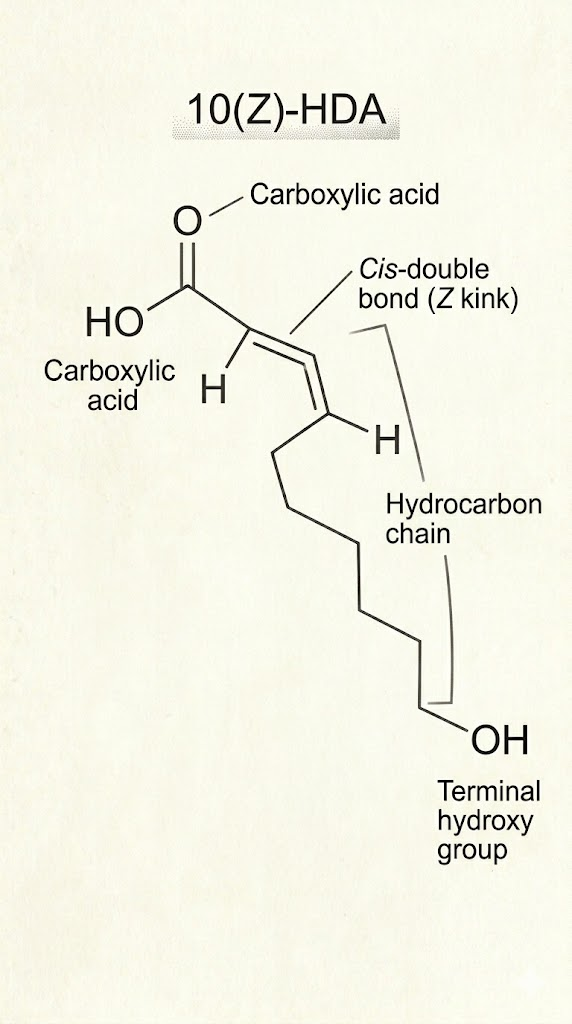
A 2019 study identified a specific bioactive lipid released by M. vaccae — 10(Z)-hexadecenoic acid (10(Z)-HDA) — that activates PPAR-α, a well-characterized human nuclear receptor central to inflammatory gene regulation. In vitro, the lipid produces a dose-dependent reduction in IL-6.
PPAR-α is a canonical, well-characterized target in human biology. A defined lipid signal — rather than a vague "immune-regulatory" effect — gives M. vaccae a level of molecular specificity unusual for postbiotic ingredients.
A published in-vitro mechanism for the source organism does not equal a clinical effect for the product. īther's claims rest on the 2026 RCT of NeuroAlly™.
Five behavioral domains studied in animal models by independent academic groups. Listed here as research context only — not a list of īther's product effects. The 2026 RCT measured perceived stress and hs-CRP.
In a 60-person randomized, placebo-controlled clinical trial in healthy adults, 2026. hs-CRP result is described factually; no therapeutic claim is made.
The mechanism behind NeuroAlly™ runs through three researchers across five decades. Their academic work — conducted in M. vaccae — is the scientific context for the pathway, not, on its own, evidence for any product claim.
The field immunologist who first recognized M. vaccae as a potent immunomodulator (Stanford & Paul, 1973). Across the 1980s–2000s he led a multinational program of TB and leprosy immunotherapy trials and co-authored the definitive M. vaccae review (Stanford, Stanford & Grange, 2004).
Author of the "Old Friends" hypothesis. Working from Stanford's organism, Rook characterized how it engages the immune system — studying it principally for inflammatory conditions such as asthma and dermatitis — and built the immunological framework the field still uses.
The neuroscientist who mapped how the pathway reaches the brain (2007, Neuroscience 146:756–772), with subsequent stress-resilience and fear-extinction work. Lowry's research lineage is the academic foundation on which NeuroAlly™ was developed.
Christopher Lowry is a co-founder of Kioga, Inc., the company behind īther — a relationship we state plainly rather than bury. His earlier academic disclosures include service on the Scientific Advisory Board of Immodulon Therapeutics Ltd. (per Hassell et al., Brain, Behavior, and Immunity, 2023). Professor Graham Rook has historically held advisory roles with SR Pharma plc, which previously held M. vaccae intellectual property (Lowry et al., 2007).
These relationships are surfaced in the interest of full transparency. The researchers' academic publications are research context; the product's clinical claims rest on the 2026 KGA-10™ trial.